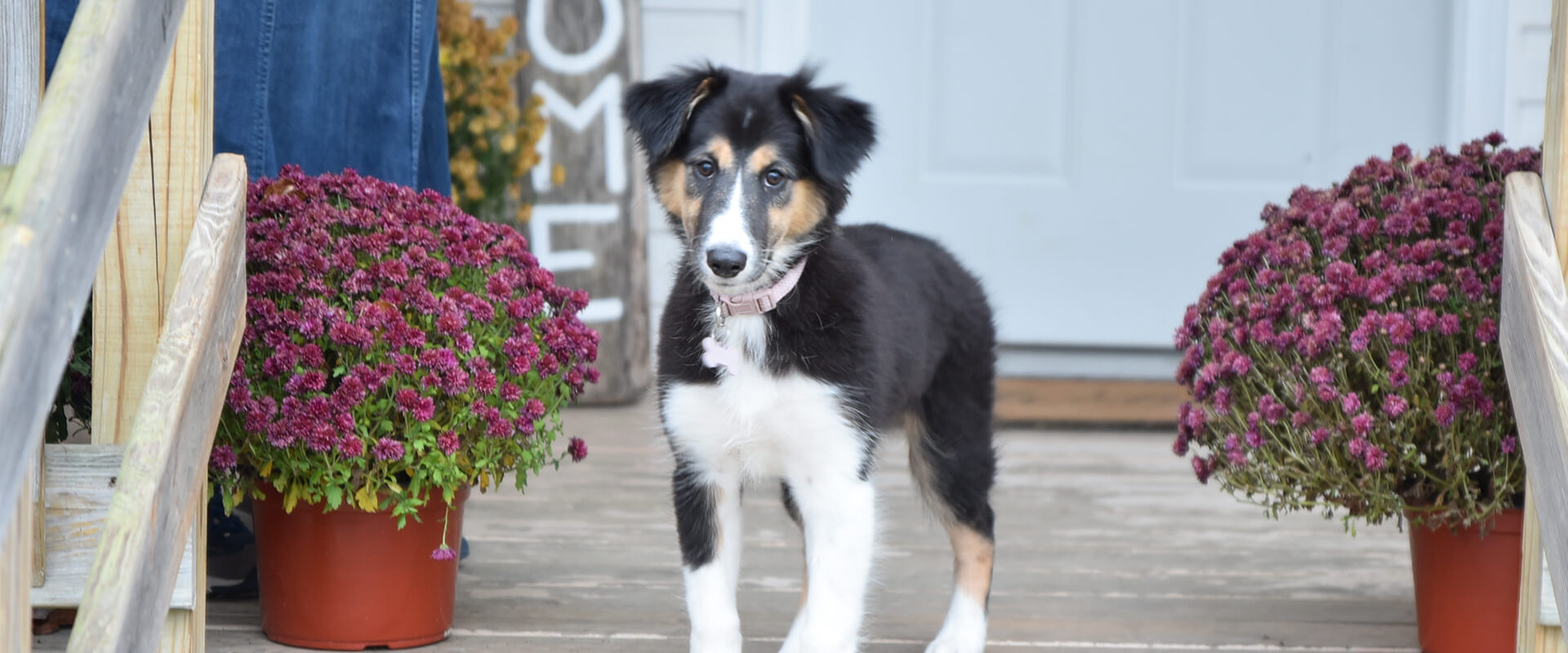
Is a Scotch Collie Right for the Modern Homestead?
A working-heritage breed, its strengths — and its limits in today’s rural settings
This resource is provided for educational purposes to help prospective owners to evaluate breed fit and is not intended as a sales listing.
Modern interest in traditional working breeds often reflects a desire for versatility and self-sufficiency. However, many of the qualities that make these dogs appealing in theory require more engagement in practice than prospective owners anticipate.
What Is a Scotch Collie?
The term “Scotch Collie” is used to describe a traditional type of working collie that predates modern show standards and companion-focused breeding. Historically, these dogs were developed to be versatile farm partners rather than specialists, capable of assisting with livestock, property awareness, and daily farm life.
Unlike modern breed definitions that emphasize uniform appearance, working heritage Scotch Collies have been shaped primarily by function and temperament. Selection focused on intelligence, adaptability, and cooperation with humans, rather than extreme drive or narrowly defined tasks.
Today, Scotch Collies are best understood not as a standardized breed in the modern sense, but as a working heritage type maintained by breeders who prioritize practical ability, sound temperament, and long-term suitability for rural environments.
Why Scotch Collies Were Traditionally Used on Small Farm
Historically, collies of Scottish and British farm origin were not bred for narrow specialization. They were valued as practical, adaptable helpers capable of responding to the shifting needs of a working property. On small farms in particular, a single dog often needed to perform multiple roles: gathering livestock, moving stock between pastures, alerting to visitors, and maintaining general awareness of the property.
Unlike highly specialized modern herding breeds that may be selected for extreme intensity or competitive performance, traditional Scotch-type collies were expected to balance work with steadiness. The emphasis was on cooperation and judgment rather than relentless drive. A dog that could read its environment, respond to direction, and settle when work was done was often more valuable than one with single-purpose intensity.
This versatility made them well-suited to mixed-use farms and rural households where daily life did not revolve solely around livestock. They were expected to work when needed and remain manageable companions when not actively engaged. That balance of awareness, trainability, and adaptability helps explain why some modern homesteaders continue to seek this type of dog.
However, it is important to understand that “versatile” does not mean effortless. Even historically, these dogs required involvement, structure, and consistent handling. Their usefulness depended as much on the owner’s engagement as on the dog’s instincts.
Working Heritage vs. Modern Collies: What’s Different
The term “collie” today can refer to dogs bred for very different purposes. Over time, some lines have been shaped primarily by conformation standards and companionship traits, while others have been maintained with working ability and functional temperament as the priority. Understanding that distinction is essential for evaluating breed fit.
Working-heritage collies are typically selected with emphasis on:
Practical intelligence and problem-solving ability
Moderate but purposeful work drive
Environmental awareness and responsiveness
Functional structure and soundness
Adaptability across varied rural tasks
These dogs are often evaluated by how they behave in real-life farm settings rather than how closely they match a show-ring standard.
By contrast, modern show- or companion-bred collies may be selected with greater emphasis on:
Consistency of physical appearance
Predictable companion temperament
Reduced working intensity
Suitability for suburban or primarily indoor living
Neither approach is inherently “better.” They simply serve different goals. A family seeking a primarily companion-oriented dog may prefer a temperament shaped for lower environmental sensitivity. A homesteader who needs a dog capable of independent judgment and engagement with livestock may look for different qualities.
Confusion arises when buyers assume all collies share the same behavioral traits. In reality, the breeding priorities behind a dog often matter more than the name attached to it. Clarifying those priorities before bringing a dog home can prevent significant mismatch and frustration later.
Temperament on a Homestead: Strengths and Real Challenges
On a modern homestead, temperament often matters more than pedigree. A dog may have the right instincts, but if its temperament does not align with the daily rhythm of rural life, friction develops quickly.
Many working-heritage Scotch Collies are valued for their attentiveness and responsiveness. They tend to be observant without being indiscriminately reactive, and many display a natural inclination to remain aware of their environment. This can make them useful partners in settings where livestock, visitors, equipment, and children may all be part of daily life.
Their cooperative nature is another commonly cited strength. Rather than operating independently at all times, many individuals show a willingness to look to their handler for direction. For homesteaders who want a dog that works with them rather than apart from them, this trait can be particularly valuable.
However, these same characteristics can present challenges.
Environmental awareness means the dog will notice change. On a quiet property without defined expectations, that awareness can shift into fence-running, repetitive alert barking at routine wildlife movement, or persistent monitoring of minor disturbances that do not require response.
Intelligence also reduces tolerance for inconsistency. A dog capable of reading subtle cues will also notice unclear boundaries. If expectations around livestock, visitors, or property limits change from day to day, confusion may express itself as pacing, fixation, or attempts to control movement independently.
Sensitivity can become friction in unpredictable environments. On homesteads where routines vary widely or structure is inconsistent, some individuals may become overly vigilant, reactive to small changes, or hesitant in unfamiliar situations.
In settings with free-ranging poultry or loosely managed livestock, moderate herding instinct may surface as persistent circling, low-level chasing, or attempts to “organize” movement without direction. These behaviors are not signs of aggression but of unmanaged instinct.
None of these patterns are unusual in working dogs. They are predictable outcomes when instinct and intelligence outpace structure.
In short, the temperament traits that make a Scotch Collie valuable on a homestead — attentiveness, intelligence, and environmental awareness — also require involvement. These are not low-maintenance dogs designed to self-manage without guidance. Their success depends on an owner willing to engage, train, and provide consistent structure.
Energy, Instincts, and Daily Management
Working-heritage Scotch Collies are not typically extreme in intensity, but they are rarely passive. Most individuals combine moderate physical energy with sustained environmental awareness. On an active homestead, that balance often feels appropriate. On a quiet property with limited engagement, it can feel restless.
Energy in this context is not simply about exercise. A long walk may reduce physical tension, but it does not replace purposeful engagement. These dogs were historically expected to observe, respond, and make decisions in real environments. When daily life offers no meaningful role, they may begin to assign one to themselves.
On properties without defined routines, this can show up as repeated fence patrols, shadowing movement throughout the day, interrupting livestock patterns, or escalating alert responses to minor activity. What begins as attentiveness can gradually turn into hyper-vigilance if expectations are unclear.
Instinct also requires management. Moderate herding tendency may appear subtly at first — lingering behind livestock, slow circling, or stepping into movement patterns. Without structured guidance, these behaviors can intensify, particularly around free-ranging poultry or young animals.
Daily management often includes:
Clear boundaries, whether physical fencing or consistent property limits
Structured exposure to livestock with supervision
Defined expectations around barking and alert behavior
Regular inclusion in chore routines or directed activity
Calm correction and consistent follow-through
None of these practices are unusual for working dogs, but they do require intention. Expecting instinct alone to produce reliability without consistent reinforcement is a common source of disappointment.
For owners who appreciate an attentive partner integrated into daily work, this level of engagement is often welcome. For those seeking a dog that can self-regulate entirely without direction, the practical demands may feel greater than anticipated.
When a Scotch Collie is a Good Fit
A working-heritage Scotch Collie is most likely to thrive in environments where involvement, structure, and purpose are part of daily life. While individual temperament varies, certain conditions consistently support long-term success.
This type of dog often does well on small to mid-sized rural properties where there is regular activity. Homesteads with livestock, gardens, visitors, and daily movement tend to provide the environmental stimulation these dogs are accustomed to navigating. The presence of routine and defined expectations helps them settle into a steady rhythm.
They tend to align best with owners who value cooperation over intensity. Those who want a dog that works in partnership — responsive to direction and attentive to human cues — often appreciate the balance found in many working-heritage collies. They tend to do well with handlers who are calm, consistent, and willing to provide guidance rather than relying on instinct alone.
Outcomes are generally more stable when the dog is included in consistent family routines. Whether accompanying chores, walking fence lines, supervising livestock movement, or simply remaining nearby during daily tasks, involvement helps channel awareness productively.
Finally, this type of dog is often best suited to individuals who understand that temperament and working ability are influenced by breeding priorities. Buyers who are willing to ask questions about selection, expectations, and management are more likely to make a stable long-term match.
In short, a Scotch Collie is often a good fit where there is space, structure, and a handler prepared to engage consistently.
When a Scotch Collie Is Not a Good Fit
A working-heritage Scotch Collie is not an ideal choice for every rural setting, and recognizing potential mismatches early can prevent frustration for both dog and owner.
These dogs are generally not well-suited to homes seeking a largely hands-off experience. Owners who expect a dog to entertain itself with minimal interaction may find the breed’s attentiveness and environmental awareness demanding rather than helpful. Without consistent guidance and engagement, boredom can quickly lead to unwanted behaviors.
Very small properties with little structure or clear boundaries can also present challenges. While some individuals adapt well, many working collies benefit from defined space and predictable routines. In environments where activity is irregular or chaotic, their sensitivity and awareness may translate into stress rather than usefulness.
They may also be a poor fit for households unprepared to manage instinct around movement. Even moderate herding tendency requires training and supervision, particularly around poultry or free-ranging livestock. Assuming instinct alone will produce reliability often leads to preventable problems.
Prospective owners primarily seeking a low-energy companion or a dog with minimal drive may find that a working-heritage collie feels “busy.” These dogs are typically most comfortable when they have a role — even if that role is modest.
Finally, individuals drawn to the breed primarily for aesthetic or nostalgic reasons, without a clear plan for daily management, may struggle. Appreciation for history and type should be accompanied by realistic expectations about temperament and involvement.
Choosing not to bring home a dog that does not fit one’s environment is often the most responsible decision. Long-term stability depends less on admiration for a breed and more on alignment between instinct, environment, and handler commitment.
Questions To Ask Before Choosing a Working Dog
Before selecting any working-oriented breed, prospective owners benefit from asking a few direct questions. Honest answers can prevent long-term mismatch.
What daily role, if any, will this dog realistically have on my property?
How many hours per day will the dog be alone without engagement?
Do I have clear physical boundaries such as fencing or defined property lines?
Am I prepared to supervise and train around livestock or poultry consistently?
How do I respond to barking, alert behavior, or environmental sensitivity?
Do I prefer a highly independent dog, or one that frequently looks to me for direction?
Am I willing to adjust my routines to provide structure and involvement?
If these questions produce uncertainty, it may be worth gathering more information before committing to a specific breed type. Working dogs tend to magnify both strengths and weaknesses in an owner’s environment and routines.
A Simple Self-Assessment: Is This Breed Right for You?
A Scotch Collie may be a good fit if:
- You live in a rural or semi-rural setting with room for structured activity.
- You value cooperation and attentiveness in a dog.
- You are willing to provide consistent guidance and daily engagement.
- You understand that instinct requires management, not assumption.
- You want a dog that participates in daily life rather than remaining passive.
It may not be the right fit if:
- You prefer a low-interaction, low-drive companion.
- Your property lacks boundaries and consistent routine.
- You expect livestock reliability without structured training.
- You are uncomfortable setting and reinforcing clear behavioral expectations.
- Your interest is primarily aesthetic rather than functional.
No breed is universally suited to every homestead. Long-term success depends less on enthusiasm and more on alignment between environment, expectations, and the dog’s natural tendencies.
Selecting a working-oriented dog is less about admiration for a breed and more about alignment between instinct, environment, and human expectation. A Scotch Collie can be a steady and capable partner in the right setting, but long-term success depends on honest evaluation before commitment. On a modern homestead, practicality often proves more important than nostalgia. When temperament, structure, and daily life are thoughtfully matched, both dog and owner are more likely to thrive.
About the Author
This guide is published by Angela Linzey of Stillwaters Heritage Farm, a working-heritage Scotch Collie breeder focused on responsible placement and long-term fit in rural and homestead settings. Placement decisions are guided by alignment between temperament, environment, and owner expectations rather than volume.